arenabattle49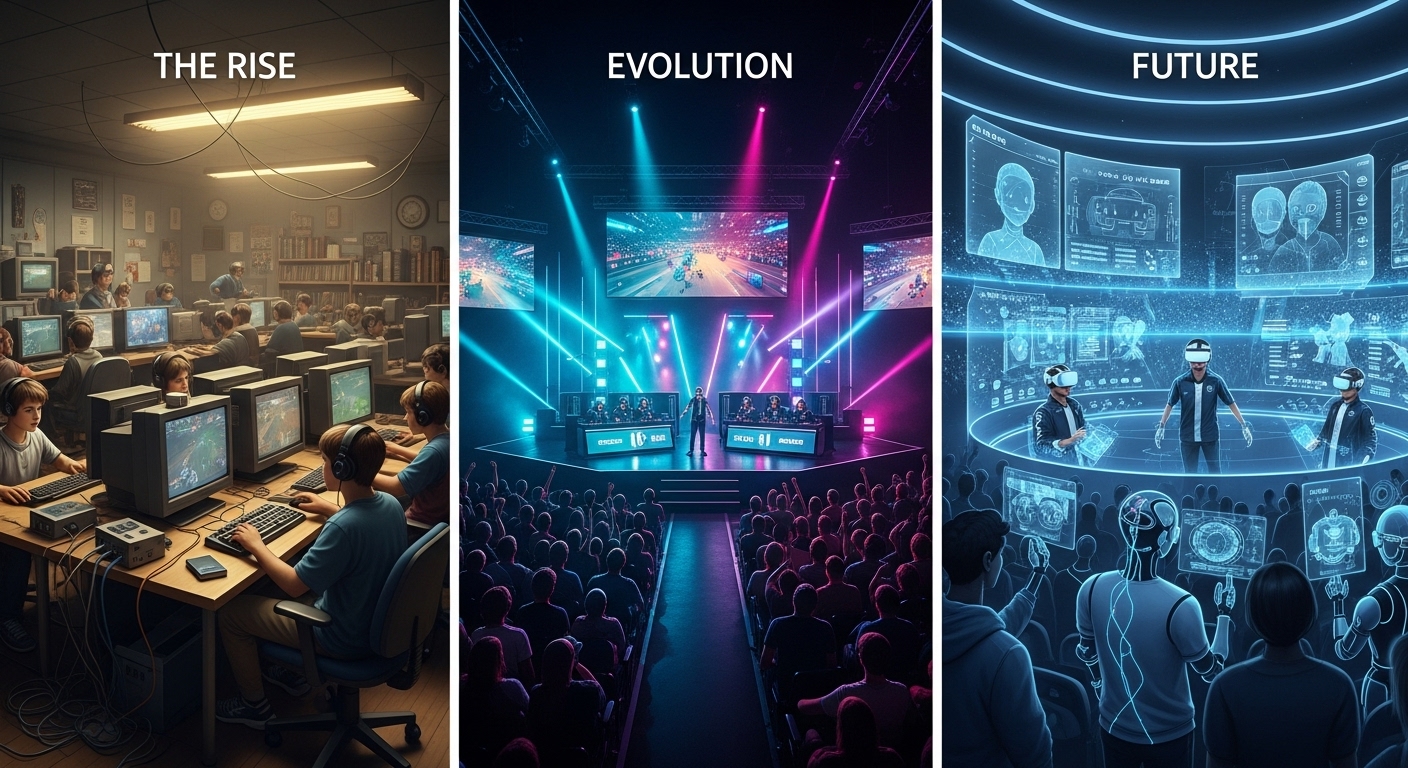
Introduction
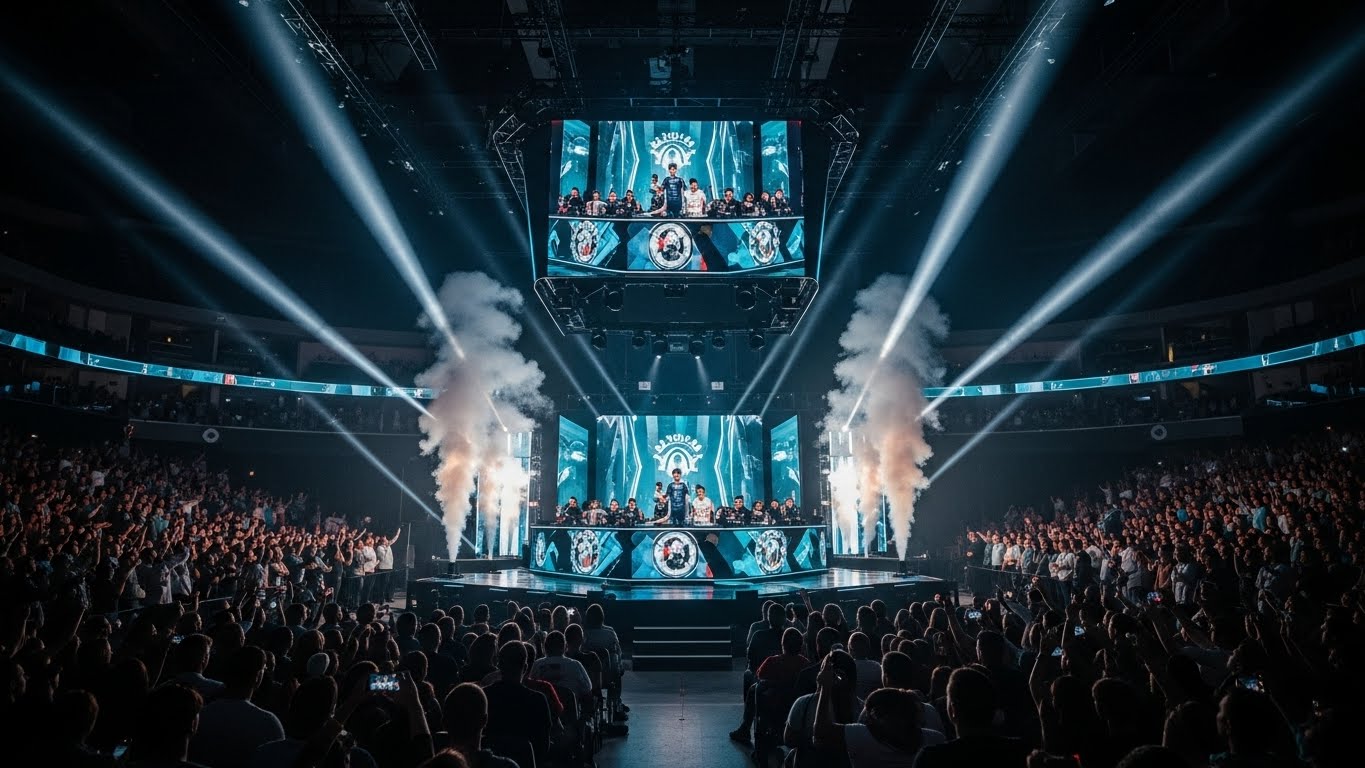
In the past few decades, a quiet revolution has reshaped the world of entertainment, competition, and technology. This revolution is known as Esports—a realm where digital games become arenas, players transform into athletes, and millions of fans gather to watch them compete on screens rather than stadiums. What once began as a small hobby in local gaming cafés or college dorms has now exploded into a multibillion-dollar industry with global recognition, professional leagues, celebrity players, and massive audiences rivalling traditional sports.
The rise of Esports is not just a story about gaming; it is a reflection of how technology, culture, and human ambition can converge to redefine what it means to compete, to entertain, and to connect.
The Early Days: The Humble Beginnings of Competitive Gaming
Esports did not appear overnight. Its roots stretch back to the early days of video gaming in the 1970s and 1980s. The first known video game competition took place in 1972 at Stanford University, where students played Spacewar!. The prize was modest—a year’s subscription to Rolling Stone magazine—but it marked the first recorded moment when digital play transformed into structured competition.
In the 1980s, arcade gaming culture began to bloom. Titles like Pac-Man, Donkey Kong, and Space Invaders turned ordinary gamers into local celebrities as high scores flashed across screens. Arcades became social hubs where players tested their reflexes and wits against one another. Competitions such as the Space Invaders Championship in 1980 drew over 10,000 participants, a staggering number for the time.
The rise of consoles in the late 1980s and early 1990s further expanded gaming’s reach. Nintendo’s World Championships in 1990 brought competitive gaming to a larger stage, touring across cities in the United States. While primitive compared to modern Esports tournaments, these events laid the groundwork for the structured competitions and fandoms we see today.
The Internet Age: A Catalyst for Global Competition
The 1990s ushered in the Internet age, and with it, a revolution in connectivity. Suddenly, gamers no longer needed to be in the same room—or even the same country—to compete. Games like Doom, Quake, and StarCraft pioneered online multiplayer modes that allowed players to test their skills against opponents from around the world.
This period marked the birth of truly organized online tournaments. The Cyberathlete Professional League (CPL), founded in 1997, was among the first to establish Esports as a professional pursuit. Quake tournaments became legendary, and the idea of gamers earning salaries, sponsorships, and fame began to take hold.
In South Korea, a unique gaming culture was emerging. Fueled by government investment in broadband infrastructure and a passionate youth population, gaming cafés known as “PC bangs” became hotspots for competitive gaming. Titles like StarCraft: Brood War turned players such as Lim Yo-hwan, known as “BoxeR,” into national icons. South Korea’s embrace of Esports in the early 2000s was a pivotal moment that would influence the global landscape for years to come.
The 2000s: Professionalization and Mainstream Recognition
The early 2000s were a defining era for Esports. This was the decade when competitive gaming transitioned from a passionate subculture into a legitimate profession. Games like Counter-Strike, Warcraft III, and Halo gave rise to global tournaments with cash prizes and sponsorship deals.
Organizations such as Major League Gaming (MLG) in North America, the World Cyber Games (WCG), and the Electronic Sports World Cup (ESWC) began standardizing competitions, creating professional circuits that mirrored traditional sports leagues.
The advancement of live-streaming platforms and better recording technologies allowed fans to watch tournaments from anywhere in the world. Gaming was no longer confined to players—it became a spectacle for audiences. The community-driven nature of gaming started merging with the accessibility of the internet, leading to an entirely new form of global entertainment.
The Explosion of the 2010s: Esports Becomes a Global Industry
If the 2000s built the foundation, the 2010s were the explosion. The decade saw Esports evolve from a niche to a mainstream cultural force. Titles like League of Legends, Dota 2, and Counter-Strike: Global Offensive established themselves as the pillars of competitive gaming.
Riot Games’ League of Legends World Championship began drawing millions of live viewers. Valve’s The International, the annual Dota 2 tournament, shattered records with prize pools exceeding 30 million dollars, funded largely by the players themselves through in-game purchases. This model of community-driven prize pools became a hallmark of modern Esports economics.
Streaming platforms such as Twitch, launched in 2011, played a crucial role in Esports’ rapid growth. For the first time, fans could follow their favorite players, watch live matches, and interact with gaming personalities in real-time. This democratized the entertainment experience—no longer did fans need television networks to connect with the games and players they loved.
By the late 2010s, major brands and investors began taking Esports seriously. Traditional sports organizations like the NBA and European football clubs formed their own Esports teams. Sponsorships from global corporations flooded in, transforming the industry’s economic landscape. Universities even began offering Esports scholarships, acknowledging gaming’s potential as a career path.
The Games That Defined the Era
Esports thrives on its games—the virtual battlefields that define each generation. Some of these games have shaped entire communities, economies, and even cultures.
League of Legends
Since its release in 2009, League of Legends has become a cornerstone of Esports. With structured seasons, international tournaments, and a passionate fanbase, it created an ecosystem comparable to any major sport. The League of Legends World Championship often fills massive stadiums and attracts millions of viewers worldwide.
Dota 2
Valve’s Dota 2 redefined competitive gaming economics with The International. Its deep strategic gameplay and fan-funded prize pools turned it into a symbol of Esports’ power to unite and mobilize communities.
Counter-Strike: Global Offensive
The Counter-Strike franchise has remained a pillar of first-person shooter (FPS) competition for decades. Its balance of precision, teamwork, and strategy makes it one of the most respected titles in Esports history. Tournaments like ESL One and the Intel Extreme Masters have given rise to legendary teams and rivalries.
Overwatch, Fortnite, and Valorant
The late 2010s also saw newer titles enter the scene. Blizzard’s Overwatch combined colorful visuals with fast-paced action, leading to the creation of the Overwatch League, one of the first city-based Esports leagues. Fortnite blurred the line between gaming and entertainment with its massive live events, while Valorant by Riot Games revitalized the tactical shooter genre with a fresh, modern approach.
The Culture of Esports: Beyond the Game
Esports is more than competition—it is culture. Fans form communities that span continents, united by shared passion and digital connection. Memes, highlight reels, cosplay, and fan art contribute to a rich ecosystem that mirrors traditional sports fandom.
Streaming has turned players into entertainers. Many professional gamers also stream their practice sessions, offering fans insight into their daily routines, personalities, and thought processes. This constant engagement has blurred the lines between athlete and influencer.
Social media platforms amplify this dynamic. Players build personal brands, interact directly with fans, and sometimes even become household names. Esports commentators, analysts, and content creators have also become integral to the experience, shaping how fans understand and enjoy competitive gaming.
The Economics of Esports: A Booming Industry
Behind the flashing lights and roaring crowds lies a complex, rapidly expanding economy. Esports revenues come from multiple sources—sponsorships, advertising, merchandise, ticket sales, and media rights. Major tournaments now attract sponsors ranging from energy drink brands to tech giants and even financial institutions.
According to industry analyses, the global Esports market has grown into a billion-dollar industry, with audience numbers in the hundreds of millions. Asia, especially China and South Korea, remains a dominant force, but North America and Europe continue to see significant expansion.
Prize pools have skyrocketed, but they represent only a small portion of the total economy. The real financial strength of Esports lies in its audience engagement. Unlike traditional sports that rely heavily on television, Esports thrives online, reaching younger demographics that spend more time on streaming platforms than on cable TV.
Franchised leagues, such as the Overwatch League and the Call of Duty League, mirror the structure of traditional sports organizations, complete with city-based teams, salaries, and long-term investments. The entry of major investors has legitimized Esports further, transforming it into a serious business sector rather than a fleeting trend.
Training, Teams, and the Esports Athlete
Gone are the days when professional gamers were seen as casual hobbyists. Today’s Esports athletes undergo rigorous training routines comparable to those of traditional sports professionals. Teams employ coaches, strategists, psychologists, nutritionists, and even physical trainers to ensure peak performance.
Players often practice for 8 to 12 hours a day, refining strategies, studying opponents, and maintaining mental focus. The physical and psychological demands are immense—reaction times must be lightning-fast, teamwork seamless, and concentration unwavering.
Training facilities for top teams resemble high-performance sports centers, equipped with cutting-edge technology, analysis rooms, and wellness programs. Organizations like Team Liquid, Fnatic, and T1 have established global reputations not only for winning titles but also for their professionalism and player development systems.
Esports Education and Career Opportunities
As Esports continues to expand, so do the opportunities within it. Universities around the world now offer degrees and scholarships related to gaming, digital media, and Esports management. Careers in this industry go beyond playing—there are roles in event production, broadcasting, marketing, analytics, coaching, and even law.
Esports has also inspired educational programs for younger students, emphasizing teamwork, problem-solving, and technological literacy. These initiatives highlight how gaming can develop valuable real-world skills, countering the outdated stereotype that games are purely a distraction.
Challenges and Controversies
Despite its success, Esports faces several challenges. Player burnout, due to intense training and tight schedules, is a major concern. Many professionals retire in their early twenties because of physical or mental exhaustion.
Toxicity and harassment within online communities remain persistent problems. Developers and organizations are working to create safer, more inclusive environments, but progress is ongoing.
The question of regulation also looms large. Unlike traditional sports governed by unified bodies, Esports is fragmented, with each game controlled by its publisher. This lack of standardization can lead to inconsistent rules, pay disparities, and disputes between organizations.
Moreover, maintaining competitive integrity—ensuring fair play and preventing cheating—is an ever-present challenge. The rise of online tournaments during the pandemic intensified concerns over match-fixing and unauthorized software use.
The Global Stage: Esports as a Cultural Force
Esports has transcended borders and languages. Major tournaments now attract audiences comparable to those of the Super Bowl or the World Cup. The 2018 League of Legends World Championship finals were watched by over 100 million viewers—an astonishing testament to the medium’s reach.
Governments have begun to recognize Esports as an official sport. In countries like South Korea and China, professional gamers are treated as athletes, with specialized visas and national recognition. The inclusion of Esports as a medal event in the 2022 Asian Games marked another milestone in its path toward global legitimacy.
Traditional media has also embraced the trend. Esports tournaments are now broadcast on major television networks, while documentaries and films explore the lives of players and the dynamics of competitive gaming.
The Future of Esports: Technology, Innovation, and Growth
The future of Esports looks brighter than ever. As technology evolves, so will the nature of competition. Advancements in virtual reality (VR) and augmented reality (AR) may create entirely new formats of Esports experiences. Artificial intelligence could enhance training tools, providing players with personalized insights and performance analysis.
Mobile Esports is also on the rise, especially in regions like Southeast Asia and India, where smartphones are more accessible than high-end PCs. Games like PUBG Mobile, Free Fire, and Mobile Legends have built massive competitive ecosystems, proving that Esports can thrive on any platform.
Esports will likely continue blending with mainstream culture—through music collaborations, fashion lines, and even crossovers with film and television. As audiences diversify, Esports will evolve beyond games into a broader entertainment industry that merges interactivity, storytelling, and community engagement.
Conclusion: More Than Just Games
Esports represents the culmination of decades of technological innovation, community building, and human creativity. What began as a pastime for enthusiasts has become one of the most dynamic and influential industries in the world. It bridges generations, breaks down borders, and redefines what it means to be an athlete, a fan, or even an artist.
Beyond the flashing screens and roaring crowds lies a deeper truth—Esports is not just about playing games. It’s about passion, perseverance, and the pursuit of excellence in a digital age. It reflects how humanity continuously seeks new arenas to test its limits, connect with others, and celebrate the thrill of competition.
As we move further into the 21st century, Esports will undoubtedly continue to evolve, shaping the future of entertainment, technology, and global culture. Whether you are a player, a fan, or simply an observer, one thing is clear—the era of Esports has only just begun.